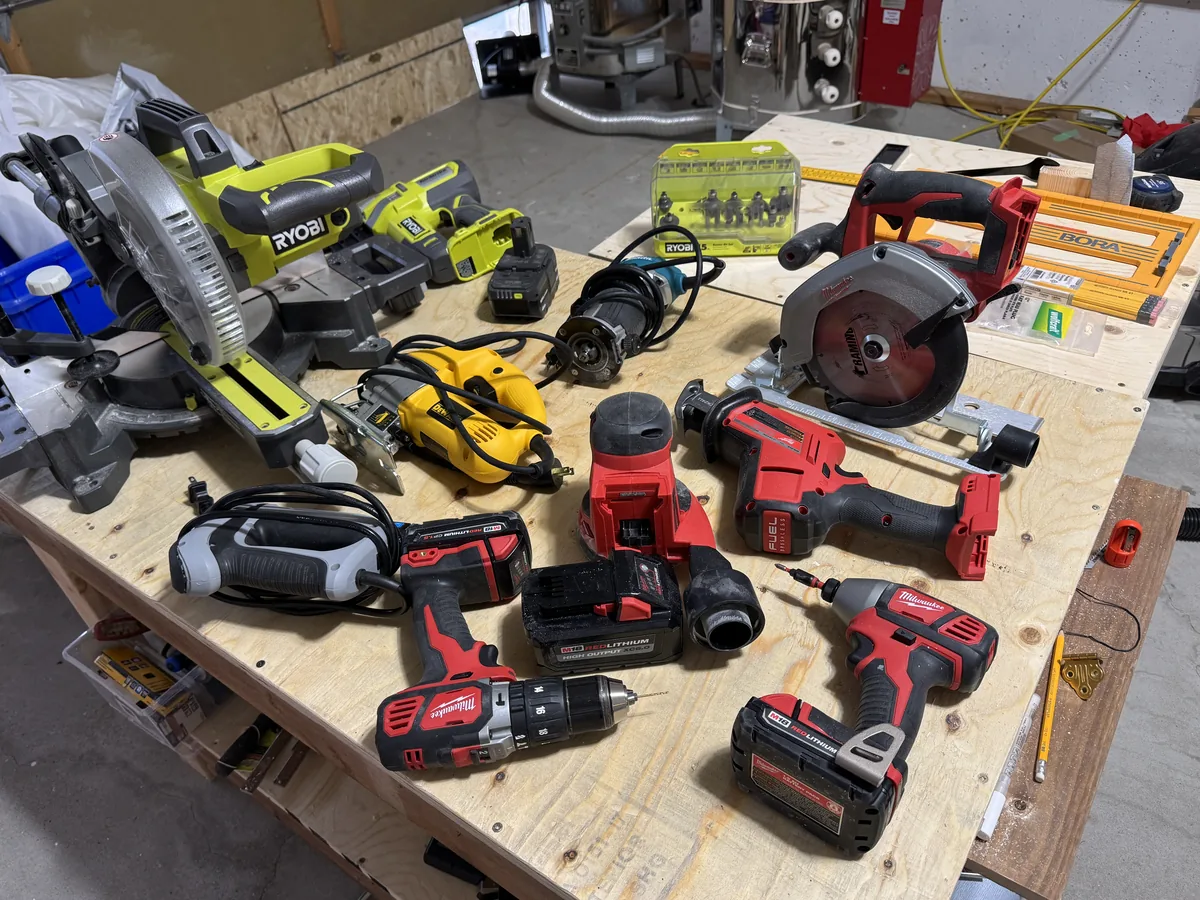
Workshop bench and hand tools used to build Acoustic That Works panels in Toronto

Why We Started
Acoustic That Works

We are active sound engineers and studio owners who got tired of a broken market — so we built the option we always wished existed.

"We set out to build the option we always wished existed."
Founded by Victor Wang Studio Engineer & Producer since 2017 · Toronto, Canada

Setting up our own studios across Toronto, we kept hitting the same wall: real acoustic treatment was either too expensive or too weak. Foam barely touched the low-mids. Pro panels worked — but not at a price most creators could justify.

So we built the option we always wanted. Dense cores, rigid wood frames, panels that reach the frequencies that matter — made by hand and priced for working musicians.

Built by Audio Professionals

We're not just manufacturers — we're active sound engineers and studio owners. We mix records, track vocals, and tune critical listening rooms for a living.

Every panel is built by hand in Toronto using the same rigid frames and dense cores we use in our own rooms. That also means we can build to your dimensions and wrap panels in a colour you choose, rather than only what fits a warehouse shelf.

Depth Over Marketing

Absorbers work lower down when they are deeper. That is why our panels start at 3.5″ and the bass traps are 5.5″, rather than the 1–2″ that foam tends to be.

Named Materials

Lightweight fiberglass in the SweetSpot, high-density Rockwool in the Reference, max-density insulation in the bass traps — each in a solid wood frame, so you know what you are buying.

Made in Toronto

Every panel is cut, filled, wrapped and framed by hand in our Toronto workshop — which is also why custom sizes and colours are possible.

You Don't Need to Know the Jargon.

Most people who contact us can't name a frequency, and don't need to. They say the room echoes, or vocals sound boxy, or the bass is uneven. That's enough to work from.

01

Tell us about the room

What it's used for, roughly how big it is, and what bothers you about how it sounds. Photos help. Measurements are useful but a rough guess is fine.

02

We suggest a starting point

Which panels, roughly how many, and where they'd go first. If fewer panels will do the job, we'll say so — an oversold room isn't a good advert for us.

03

You get a quote

Sizes, colours, and pricing in writing, including anything custom. Quotes are free.

How We Stack Up

Not all acoustic treatment is created equal. Here's why serious studio owners choose real panels over foam and thin boards.

Feature

Best Choice

Acoustic That Works

vs

Acoustic Foam

vs

Standard 2″ Panels

Panel Depth

3.5" – 5.5" deep

Reaches deep into low-mid frequencies where room problems live.

1"–2" deep

Only handles high frequencies — misses the mud range entirely.

Only 2" deep

Thinner panels absorb less in the low-mids than deeper ones.

Core Material

Fiberglass / Rockwool

Dense, rigid core built for absorption across a wide frequency band.

Open-cell foam

Mostly absorbs higher frequencies, with little effect lower down.

Thin mineral wool

Better than foam, but too shallow to hit low-mids.

Low-Mid Control

✓ Built for the low-mids

Tames the "mud" in vocals, guitars, and kick drum.

✗ High freq only

Thin foam does comparatively little at the frequencies that cause most complaints.

✗ Less low-mid absorption

Low-mid buildup stays — your mixes still sound muddy.

Structure

Rigid hardwood frame

Stays flat, mounts cleanly, lasts for decades.

No frame

Degrades over time, yellows and crumbles. Looks cheap.

Basic frame

Variable quality — often warps or sags over time.

Coverage Needed

Fewer panels, better result

Each panel actually works — so you need less of them.

More panels, less result

You cover the walls but never fix the real problem.

More panels, less result

Still won't treat the mud range no matter how many you add.