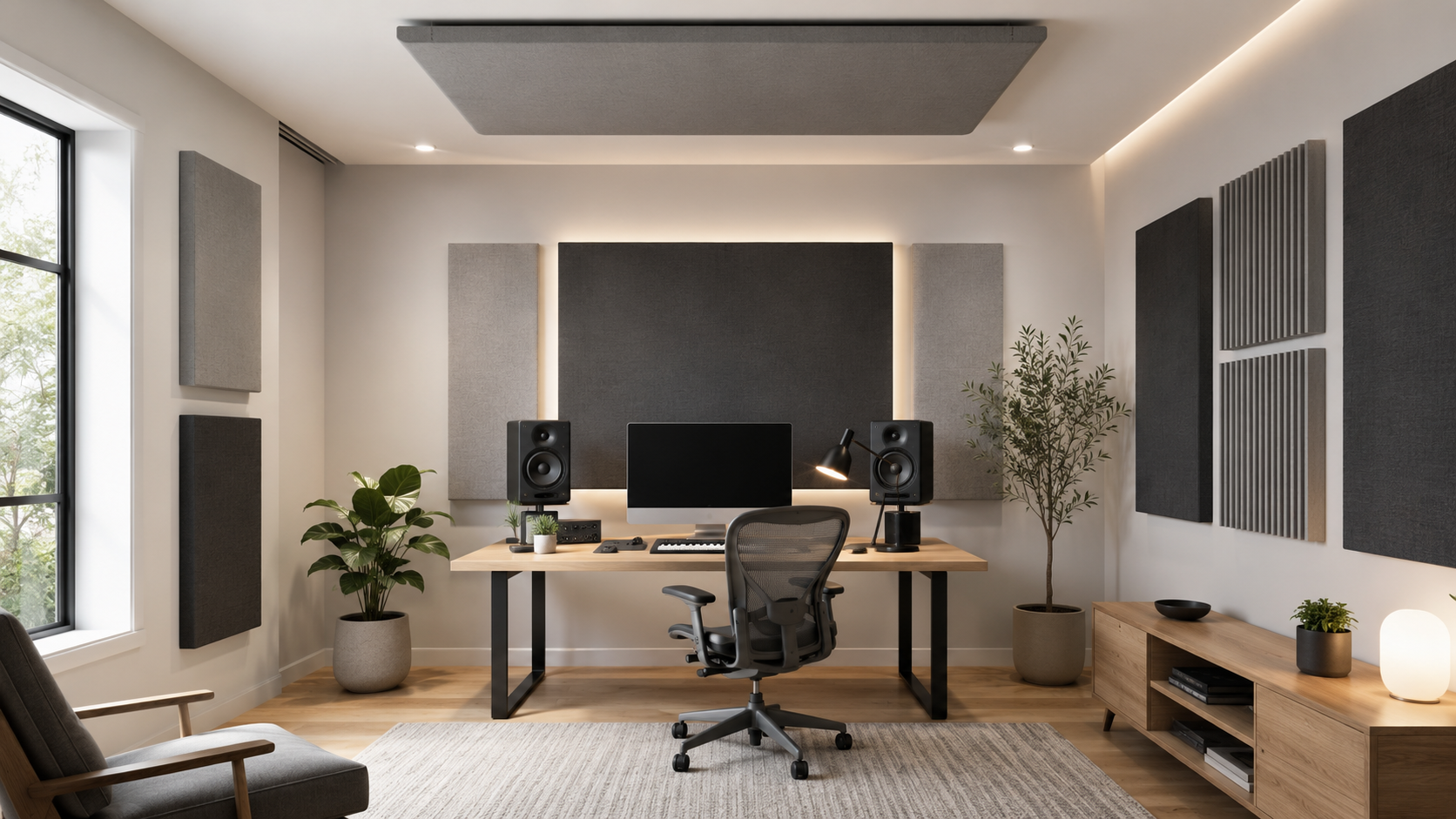
Acoustic panels can improve speech clarity, reduce echo, and make music sound more balanced. However, not all panels perform the same way.
The first step is to identify the problem in your room. Acoustic panels are designed to control reflections inside a space. They are useful for recording studios, offices, restaurants, classrooms, home theatres, and other rooms that sound harsh, loud, or unclear.
They should not be confused with soundproofing. Acoustic treatment improves sound within the room, while soundproofing is intended to reduce sound travelling between rooms.
Check the Panel Material
Effective acoustic panels usually contain fibreglass, mineral wool, or another dense absorptive material. These materials provide broader sound absorption than thin decorative foam.
When comparing panels, ask what is inside them. The exterior fabric may affect appearance, but the internal material has a much greater impact on performance.
Consider the Thickness
Thicker panels generally absorb a wider range of frequencies.
Thin panels mainly reduce higher-frequency reflections. Panels around 3.5 to 4 inches thick are more suitable for controlling both high frequencies and lower-mid frequencies, making them a practical choice for many rooms.
Dedicated bass traps may be required when low-frequency buildup is a major problem.
Look at Construction Quality
A well-made panel should have a strong frame, securely fitted insulation, breathable fabric, clean edges, and reliable mounting hardware.
The fabric should allow sound to pass through to the insulation instead of reflecting it back into the room.
Good construction also helps the panel remain straight and presentable over time, especially in studios, schools, offices, and commercial spaces.
Think About Placement
Even a high-quality panel must be placed correctly.
Common locations include first reflection points beside speakers, behind the listening position, across parallel walls, and on ceilings. In rooms used mainly for conversation, panels should usually be distributed throughout the space.
The right quantity and placement depend on the room size, ceiling height, surface materials, furniture, and intended use.
Final Thoughts
The best acoustic panel is one that combines effective insulation, suitable thickness, solid construction, breathable fabric, and thoughtful placement.
Choosing panels based only on price or appearance can lead to disappointing results. A properly designed treatment plan will create a room that sounds clearer, more comfortable, and better suited to its purpose.