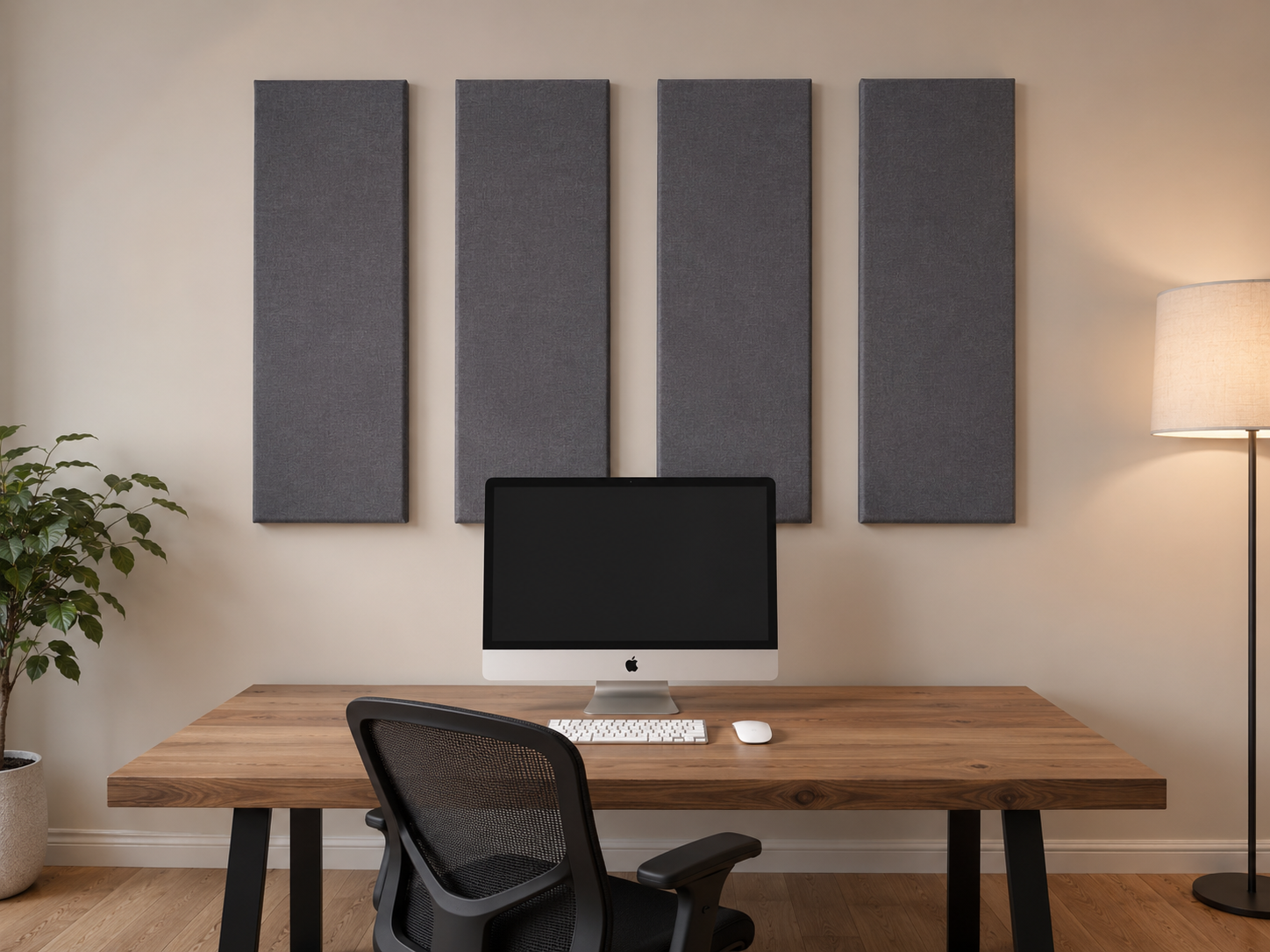
One of the most common questions about acoustic treatment is: how many panels does a room actually need?
There is no single number that works for every space. The correct amount depends on the room size, ceiling height, surface materials, furniture, and how the room will be used.
A small podcast room may only need treatment at a few important reflection points, while a large concrete office, rehearsal room, restaurant, or classroom may require much more coverage.
Start with the Room's Surfaces
Rooms with hard surfaces usually need more acoustic treatment.
Concrete walls, glass windows, hardwood floors, bare ceilings, and large open spaces reflect sound back into the room. These reflections increase echo and make speech or music less clear.
Carpet, curtains, upholstered furniture, and other soft materials provide some natural absorption, but they may not be enough to control the full frequency range.
An empty room will also sound more reflective than the same room after furniture and people are added.
Consider How the Room Is Used
The purpose of the room has a major effect on how much treatment is required.
For an office or meeting room, the goal is usually to reduce reverberation and improve speech clarity.
For a recording studio, mixing room, podcast room, or home theatre, panel placement must be more precise. First reflection points, speaker positions, listening locations, corners, and ceiling reflections should all be considered.
Rooms with drums, subwoofers, bass amplifiers, or large speakers may also require thicker panels or dedicated bass traps.
Coverage Matters More Than Panel Count
The number of panels alone does not tell the whole story.
Six large panels may provide more useful absorption than ten small panels. Panel thickness, internal material, mounting position, and air gaps also affect performance.
As a general starting point, many rooms benefit from treating approximately 15% to 30% of the available wall and ceiling area. However, this is only a rough guideline. Highly reflective rooms may require more, while furnished residential spaces may require less.
The goal is not to cover every surface. Too much absorption can make a room feel unnaturally dry. The aim is to create balanced treatment that improves clarity while allowing the room to remain comfortable and natural.
Placement Is Just as Important
Panels should be placed where they will have the greatest effect.
Common locations include:
- First reflection points beside speakers
- Behind the listening or recording position
- Opposite large windows
- Across parallel walls
- Above desks, tables, or recording areas
- Near loud instruments
- In corners for bass treatment
Spreading panels throughout the room usually provides better results than placing all of them on one wall.
Why an Acoustic Consultation Helps
Estimating panel quantity from room dimensions alone can be misleading. Two rooms of the same size may need very different treatment depending on their construction, layout, furniture, and purpose.
An acoustic consultation can help determine:
- The main acoustic problems in the room
- The recommended number and size of panels
- The best panel locations
- Whether ceiling panels or bass traps are needed
- The most suitable panel thickness
- How to achieve the desired result without overtreating the space
At Acoustic That Works, we can review your room dimensions, photos, layout, and intended use to create a practical treatment recommendation. This helps ensure that every panel has a purpose and that you are not purchasing more—or less—than your room actually needs.
Proper planning can save time, reduce unnecessary costs, and produce a noticeably better result.